


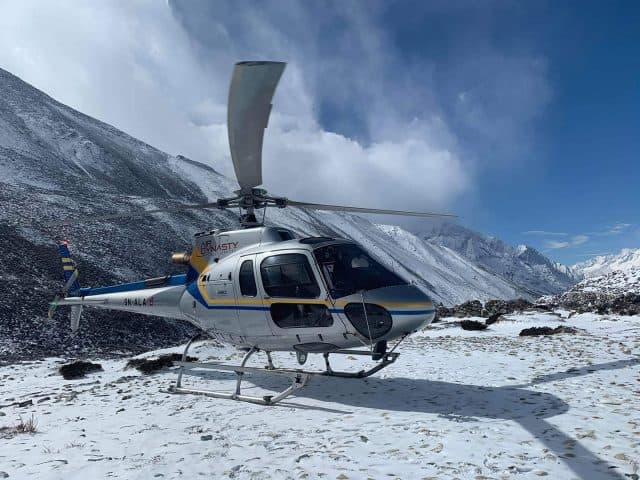


Mt Everest Heli Sightseeing Nepal Bhutan And Tibet Tour

Tripadvisor
Ask for Price
22 days
Why book with us?
Discounts are solely based on your group size.
We do not add anyone to your group
- Tripadvisor ★ 5 (from 60+ reviews)
- Competitive Price
- 100% Guaranteed Departures
- Expert Local Guides
Trek Overview
Mt Everest Heli sightseeing, Nepal, Bhutan, and Tibet Tour is a trip in and around Nepal, Bhutan, and Tibet. This trip is mixed with Everest sightseeing, a jungle safari in Chitwan, and a tour in Pokhara. In addition, you also visit Bhutan and Tibet where you can witness the traditional culture and lifestyle. Above all, this trip introduces the natural and cultural beauty of Nepal, Bhutan, and Tibet.
Firstly, you’ll fly to Everest Base Camp on a Helicopter and relish the sights of mountains in the Everest range. After spending some time in the company of Mt. Everest (8848m), you return to Kathmandu. Next, you visit the world heritage sites in Kathmandu then drive to Nagarkot to view the sunset. Next, you fly to Lhasa and explore the popular destinations in Tibet. Further, you visit Potala Palace, Tibet traditional hospital, Jokhang temple, and many other places. You fly back to Kathmandu and follow with a flight to Bhutan. You’ll visit Gangtey and the Tiger’s Nest Monastery among other sites in Bhutan. Finally, you fly back to Kathmandu and drive to Pokhara and visit some of the famous attractions in the city. Further, you head to Sarangkot early morning for sunrise and head to Chitwan. Here, you go for a jungle safari in Chitwan and return to Kathmandu.
Autumn (Sept-Nov) and spring (Mar-May) seasons offer the best views of the mountains and the natural beauty of Nepal, Bhutan, and Tibet. Thus, these are the ideal times for this trip. Likewise, people of all age groups can easily do this trip.
At Trek Central Nepal, we aim to provide the best services to our clients. Also, we have numerous trips across Nepal and Bhutan. Moreover, we also allow you the option to modify the trip itineraries.
Altitude Profile
Itinerary
You will arrive at the Tribhuvan International Airport in Kathmandu and our representative will be there to meet you. He will be responsible for transferring you to your hotel. You can spend the rest of the day exploring the city or preparing for the trip. Overnight in Kathmandu.
Are you dissatisfied with this itinerary?
You can customize your holiday. Let us help you tailor-make your precious Vacation.
What's Included
- 1 hour trekkers massage / Yoga after the trip completion.
- 3 star accommodations during Bhutan tour
- 3 star accommodations during tibet tour
- 3 star hotel accommodation in Kathmandu,Chitwan and Pokhara
- All jungle activities in Chitwan.
- All meals included in Bhutan
- All meals included in Chitwan
- All monument entrance fees.
- Bhutan visa fee and permits
- Breakfast at Syanboche(Everest View Hotel)
- Flight tickets Kathmandu-Lhasa-Kathmandu
- Helicopter sightseeing
- Kathmandu-Lhasa-Kathmandu flight tickets
- Kathmandu-Paro-Kathmandu fly tickets
- Licensed, experienced and English speaking tour guides
- Tibet visa and permits
- Welcome and farewell dinner at one of the finest Nepalese Restaurant with traditional ethnic music and dance.
What's Not Included
- Airfare for international flights.
- Cost for additional trips.
- Extra night accommodations in case of early arrival, late departure, and early return from the trip(due to any reason) than the scheduled itinerary
- Lunch and dinner in during Tibet tour
- Nepal arrival visa.
- Personal expenses
- Personal expenses (phone calls, laundry, bar bills, battery recharge, extra porters, bottle or boiled water, shower, etc.)
- Tipping to staffs (as an appreciation).
- Travel insurance which covers emergency rescue and evacuation.
FIXED DEPARTURES
21st Mar – 11th Apr, 2026
31st Mar – 21st Apr, 2026
Essential Information
Physical Fitness for Trekking
It is crucial to examine your physical condition before beginning any expedition. Before beginning any walk, people with pre-existing illnesses or medical disorders should speak with their doctor. High altitude treks can be physically taxing, even for people in good health, so it’s crucial to take your time and thoroughly acclimate before beginning. It is advised that you take a break and let your body acclimate to the altitude if you feel uneasy or encounter symptoms like headaches or shortness of breath. It’s advised to begin training at least three to four months before a strenuous expedition. As a result, you will be able to undertake the trek with increased strength and endurance. Regular, challenging exercise for at least an hour, three to four times a week, should be a part of any effective training program. This could involve sports like hiking, running, or cycling as well as weightlifting to increase muscular mass and general fitness. Remember that a safe and pleasurable hiking trip depends on careful planning. Therefore take the time to see a doctor, adjust to the environment properly, and prepare your body for the obstacles that lie ahead.
Physical Fitness for Climbing
When climbing mountains, it’s imperative to put your physical health and safety first, regardless of your level of experience. Before beginning a climb, those with pre-existing medical conditions must contact a doctor, and even those in good health must take the required procedures to adequately acclimatize and be physically fit for the endeavor. It is advised to begin training three to four months in advance, engaging in at least an hour of demanding activity, three to four times a week, involving sports like running, cycling, or trekking as well as strength training to increase lean muscle mass and general fitness. It’s crucial to take the time to speak with a doctor, acclimatize appropriately, and prepare your body for the challenges ahead if you want to climb safely and have fun side by side.
Meals
Enjoying the varied cuisine of the world is a part of traveling with Trek Central Nepal. While there are numerous dining options, meals are typically not included in the trip fee. As a result, you have the freedom to choose where and what to eat in addition to the extra advantage of economic freedom. The cost of food is typically low, and we frequently eat with our groups, giving us the chance to sample a variety of foods and form relationships with other travelers. Dining together is not required, though. Throughout your journey, your CEO can suggest the top eateries around. When breakfast is served, it usually consists of bread and eggs, rice porridge, or Asian-style noodles. Vegetarians should anticipate a wide range of options, while certain areas might only offer a few. In general, food is provided when trekking in remote locations. You’ll also be able to taste local authentic foods and beverages of indigenous communities, which will add an extra charm to your trip.
Accommodation
A tea house is a flexible facility that performs the functions of a guest house, restaurant, and gathering place while on a tea house walk. Except for those in high elevations, where there are dormitories, most tea houses offer private rooms. The lodges are typically simple, with only a few pieces of furniture, twin beds, and communal restrooms that could include either squat-style or western-style toilets. While most tea houses have running water, hot water may only be offered for an additional fee, and using water that has been heated with wood is discouraged because Nepalese communities lack enough fuel to do so without endangering the environment. While the rooms lack electric illumination unless the community has access to it, the dining room/lounge is heated by a Bukhara stove and generally has solar lighting. Lunch is typically eaten at a trailside restaurant, and breakfast and dinner are typically offered at the tea house. Every tea shop serves the classic Nepali cuisine Dal Bhat along with a range of other foods such rice, veggies, noodles, potatoes, soup, and Nepalese adaptations of western dishes. Soft drinks, munchies, beer, and Nepali milk tea are all available in tea rooms. Trekkers can purchase boiled water, and buying bottled water is not advised owing to its negative effects on the environment.
Packing List
Available for Rent:
- Sleeping bag (100 – 200 NPR per day)
Cold Weather:
- Long-sleeved shirts or sweater
- Scarf
- Warm gloves
- Warm hat
- Warm layers
Conservative Dress:
- Modest clothing that covers knees and shoulders (Long pants, long skirts, shirts that cover shoulders)
- Shawl or scarf (for temple visits)
Documents:
- Flight info (required) (Printouts of e-tickets may be required at the border)
- Insurance info (required) (With photocopies)
- Passport (required) (With photocopies)
- Required visas or vaccination certificates (required) (With photocopies)
- Vouchers and pre-departure information (required)
Essentials:
- Binoculars (optional)
- Camera (With extra memory cards and batteries)
- Cash, credit and debit cards
- Day pack (Used for daily excursions or short overnights)
- Ear plugs
- First-aid kit (should contain lip balm with sunscreen, sunscreen, whistle, Aspirin, Ibuprofen, bandaids/plasters, tape, anti-histamines, antibacterial gel/wipes, antiseptic cream, Imodium or similar tablets for mild cases of diarrhea, rehydration powder, water purification tablets or drops, insect repellent, sewing kit, extra prescription drugs you may be taking)
- Flashlight/torch (Headlamps are ideal)
- Fleece top/sweater
- Footwear
- Hat
- Locks for bags
- Long pants/jeans
- Moneybelt
- Outlet adapter
- Personal entertainment (Reading and writing materials, cards, music player, etc.)
- Reusable water bottle
- Shirts/t-shirts
- Sleepwear
- Small travel towel
- Sunglasses
- Toiletries (Preferably biodegradable)
- Watch and alarm clock
- Waterproof backpack cover
- Windproof rain jacket
Health & Safety:
- Face masks (required)
- Hand sanitizer (required)
- Pen (Please bring your own pen for filling out documents.)
- Quick Covid Test/Antigen Test
High Altitude Trekking:
- Down jacket (Recommended for winter season)
- Hiking boots (Worn frequently prior to departure)
- Pack liners to waterproof bags
- Reusable water bottler – minimum 1 litre (Aluminium or Nalgene polypropylene are best)
- Sandals (For wearing around camp in the evenings)
- Sleeping bag and liner, 4 season
- Spare boot laces
- Thermal base layer
- Waterproof gloves
- Whistle
- Windproof rain gear
- Wool socks
Note: While trekking, it is highly recommended to wear clothing made of either wool or synthetic materials in layers, as they are quick-drying and provide better insulation. It is suggested to wear a base-layer, followed by a mid-layer such as a light fleece jacket, and then a windproof and waterproof layer to stay protected from the elements.
Please be aware that for this trip you will also need to have,
- Flight info (required) (Printouts of e-tickets may be required at the border)
- Insurance info (required) (With photocopies)
- Passport (required) (With photocopies)
- Required visas or vaccination certificates (required) (With photocopies)
- Vouchers and pre-departure information (required)
What to Take
It is advised to bring as little as possible because this is an energetic tour that will involve continual mobility. One porter will transport the trekking equipment for two travelers in a waterproof duffel bag that we will provide. Each passenger’s luggage is only allowed to weigh a total of 10 kg (22 lbs). The weight limits for checked baggage and hand luggage for flights from Kathmandu to Lukla are 10 kg (22 lbs) and 5 kg (11 lbs), respectively. Some of your goods may be left in Kathmandu, but the hotel can impose a storage fee. But, you must carry all of your hiking supplies on the trek with you.
Travel Insurance
All of our travelers are required to have travel insurance, and you won’t be allowed to join the group until your CEO has approved the specifics of your coverage. It is crucial to check that your travel insurance policy covers medical expenses, and we demand a minimum of USD 200,000 in coverage for emergency rescue and repatriation. Additionally, we advise that the policy cover loss of luggage and personal goods, cancellation, curtailment, and personal liability. We demand proof of purchase of the trip, such as a receipt or credit card statement in your name, even if you have credit card insurance. To verify the extent of protection offered by their participating insurer and to get the insurer’s emergency contact phone number, please get in touch with your bank.
Weather:
The prime trekking period in Nepal lasts from late October to mid-May and features pleasant walking temperatures at most heights, clear skies, and sporadic snowfall. The Kathmandu Valley has daytime temperatures ranging from 15C to 35C (59F to 95F), which drop to about 10C (50F) at 11,810ft (3,600m) and continue to fall as we climb. Trekking benefits vary depending on the season.
Autumn/Post-monsoon: mid-September to late-November
With daytime temperatures in Kathmandu about 20C, this is the primary hiking season in Nepal (68F). The skies are usually clear, providing pleasant hiking days with unobstructed views of the mountains. At the highest peaks, nighttime temperatures can dip to -10C (14F).
December till the end of February
Despite the chilly weather, this is the best time of year to trek in Nepal. Most of the time, especially in December, the skies are crystal clear, making for the greatest mountain views. At the highest altitudes, nights can get very cold, reaching -20C (-4F), while days are generally pleasant and sunny. Few people are using the paths. The highest midday temperature in Kathmandu is 19C. (66F).
Spring/pre-monsoon: from March to May
Temperatures are normally warmer during the day and at night, however in the afternoons a haze frequently forms. Lowlands may get very hot, with Kathmandu experiencing temperatures as high as 35C (95F). A popular time for trekking is spring because of the flowering plants.
On any departure, snow is likely, especially at higher altitudes.
Keep in mind that hilly places might experience unpredictable weather, so you should be ready with any unfavorable conditions beyond described above.
Internal Flight Delays
The beginning or conclusion of your trek could be impacted if flights to/from Lukla airport are delayed due to bad weather. The schedule has been extended by one day to cater for this. If there is a severe delay, clients may choose to go by helicopter for an extra fee or have a different journey to a different area. Between US$500 and US$600 per person is the cost, which The Company will pay for in full. The company will rebook international flights for Flight Included customers in the event of persistently bad weather, but Land Only customers will be responsible for making their own arrangements and paying any related charges.
Drinking Water
Staying hydrated is crucial when engaging in physical activity, especially in high altitudes where it is advised to consume three to four liters of fluid per person each day. It is advised against purchasing bottled water because it adds to the plastic pollution problem. Instead, heated water, which is ideal for a bedtime refill, is sold in teahouses for between 150–300 Nepalese rupees per litre. As an alternative, free cold water is offered at teahouses, although it must be treated before consumption. Reusable bottles with efficient water treatment—such as handheld UV filters—are advised; Trek Central is a partner in the Water-to-Go filtration system. Defrost the filter by soaking it in lukewarm water for 10 to 15 minutes to prevent the filter from becoming clogged if the water freezes.
Passports and Visas
Except for Indian nationals, all travelers must get a visa to visit Nepal; this rule is valid for both air and ground travel. The majority of travelers can get visas when they arrive, however there are certain exceptions. There are other entry locations where visas can be obtained on arrival for overland travel, however Tribhuvan International Airport is the only airport that offers visas for air travel.
15-day single admission fee is $30;
30-day single entry fee is $50;
90-day multiple entry fee is $125.
These are the three entry options available with the tourist visa. For overland admission, make sure your passport is valid for at least six months from the date of arrival; for airport entry, kiosks are available for taking photos. Furthermore, have cash on hand and three passport photos with you. For more details visit Department of Immigration Website.
Arrival Instructions
Look for our company’s staff holding a sign with your name on it at Tribhuvan International Airport to welcome you and take you to your hotel in Kathmandu. Instead of accepting anyone’s offer to carry your bags, follow our designated agents and keep a watch on your personal items.
How to Book?
Read the terms and conditions carefully at first, ask a company representative any questions you may have, and fill out the booking form properly to reserve a tour. To make sure the trip is appropriate for your level of experience and fitness, it’s crucial to fully comprehend all of its components. Before paying the non-refundable deposit, take the time to thoroughly clarify any of your issues so that you can book your trip with confidence.